Bitcoin proof of work does not store energy. It does not trap electricity inside data or convert power into "energy-backed bits." Electricity is consumed to perform computation and immediately dissipated as heat. What remains is information proving work was done—not energy that was stored.
Computation, Not Energy Storage
A Bitcoin miner performs a massive number of calculations. Those calculations require electricity to run transistors, and as those transistors switch, electrical energy converts to heat. That heat leaves the machine and enters the environment.
The blockchain records only the result of computation, not the electricity that powered it. The energy is gone. What remains is proof that costly computation happened.
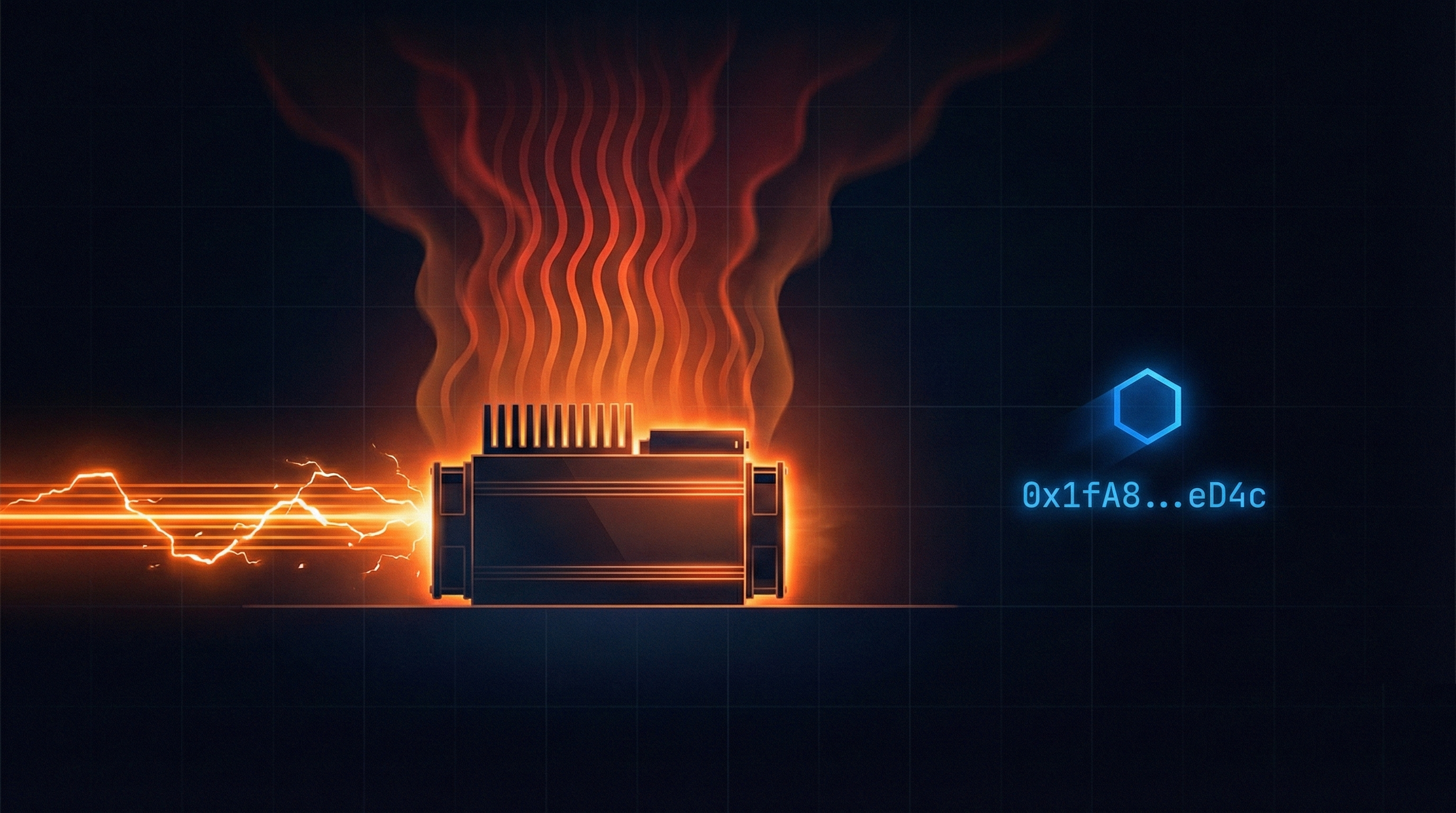
What a Bitcoin Miner Actually Does
More precisely, a miner repeatedly takes a block of data and runs it through a cryptographic hash function called SHA-256. The output is a fixed-size number—essentially a fingerprint of the input.
The key property of a cryptographic hash is unpredictability. You cannot know what number will come out without actually computing it. There is no shortcut.
Miners adjust a small part of the block data called a nonce and hash again. Each change produces a completely different output. They do this billions of times per second, across the entire network.
Try It: The SHA-256 Hash Function
Type anything below and watch the hash change completely with every keystroke. Notice how even a tiny change—a single letter—produces a totally different result.
Now here's the key insight: miners aren't hashing random text. They're hashing a very specific data structure—the block header—and they can only change one small part of it.
Try It: Hashing a Block Header
This is a simplified Bitcoin block header. The nonce is the only field miners change. Your goal: find a hash that starts with two zeros (00). Try incrementing the nonce and see how long it takes you.
Why Guessing Is Necessary
SHA-256 behaves like a digital blender. Even a one-bit change in input produces a totally different output. No smooth progression, no partial credit.
Because of this, miners cannot aim for a specific result. They can only guess and check.
The Bitcoin network defines a target. A hash is valid only if it falls below that target—think of it like requiring a hash to start with a certain number of zeros. Each additional required zero makes the task exponentially harder, demanding more guesses on average.
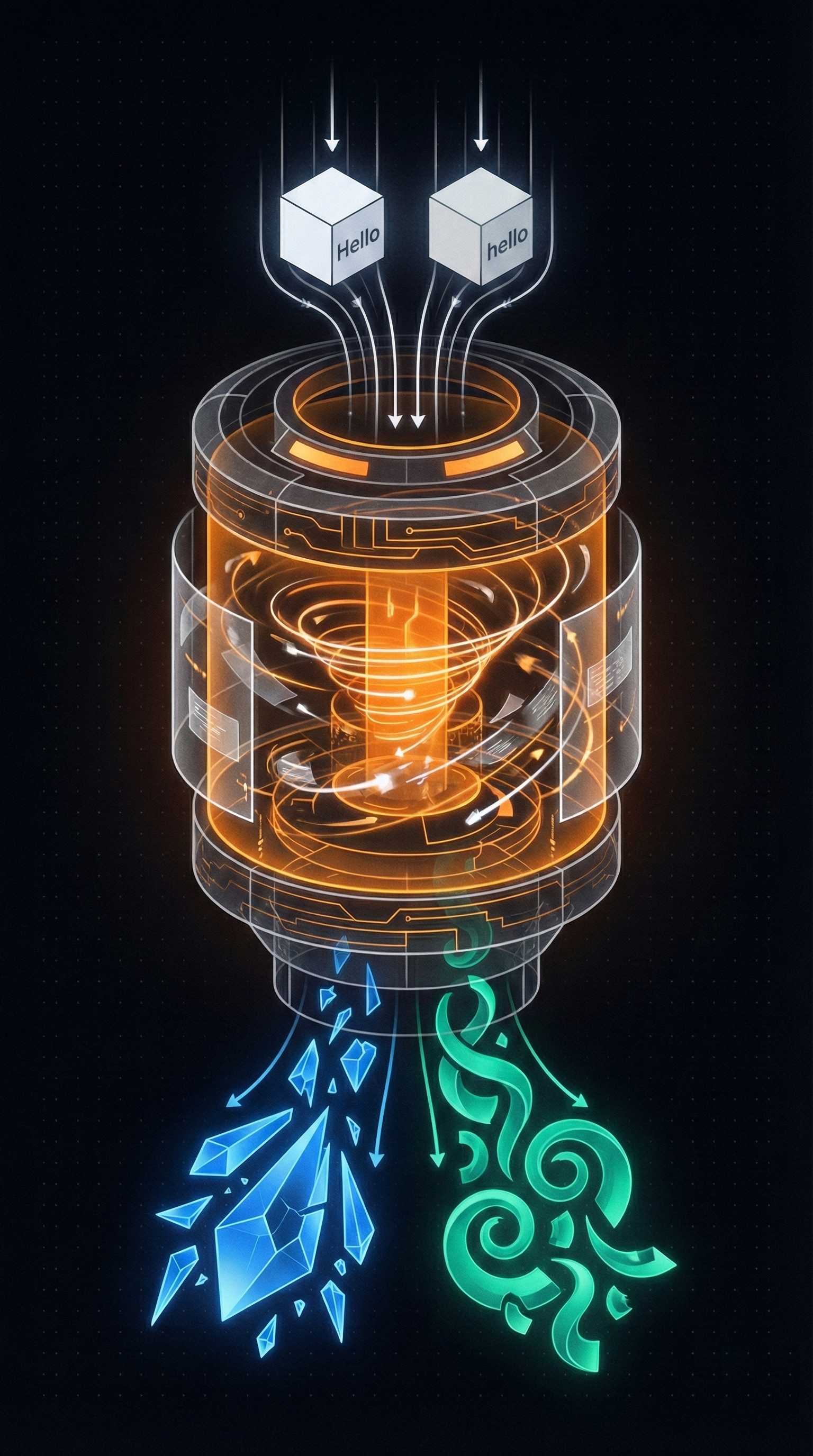
Difficulty: Leading Zeros
Each additional leading zero required makes finding a valid hash exponentially harder. Here's how the probability of finding a valid hash decreases:
Each additional zero is 16× harder. Going from 2 zeros to 19 zeros means the puzzle is 1617 times harder—about 295 quintillion times more difficult.
Watch Mining in Action
This simulator shows what mining actually looks like. The nonce starts at 0 and increments with each attempt. We hash the block header and check if the result starts with enough zeros. Most attempts fail. When one succeeds, we've "mined a block."
Mining Simulator
Hit start and watch the miner increment through nonces looking for a hash with enough leading zeros.
Where the Energy Goes
Every guess requires computation. Every computation requires electricity. That electricity powers the hardware and dissipates as heat.
When a miner finally finds a valid hash, the network verifies it instantly with a single computation. This asymmetry is the core of proof of work: expensive to produce, cheap to verify.
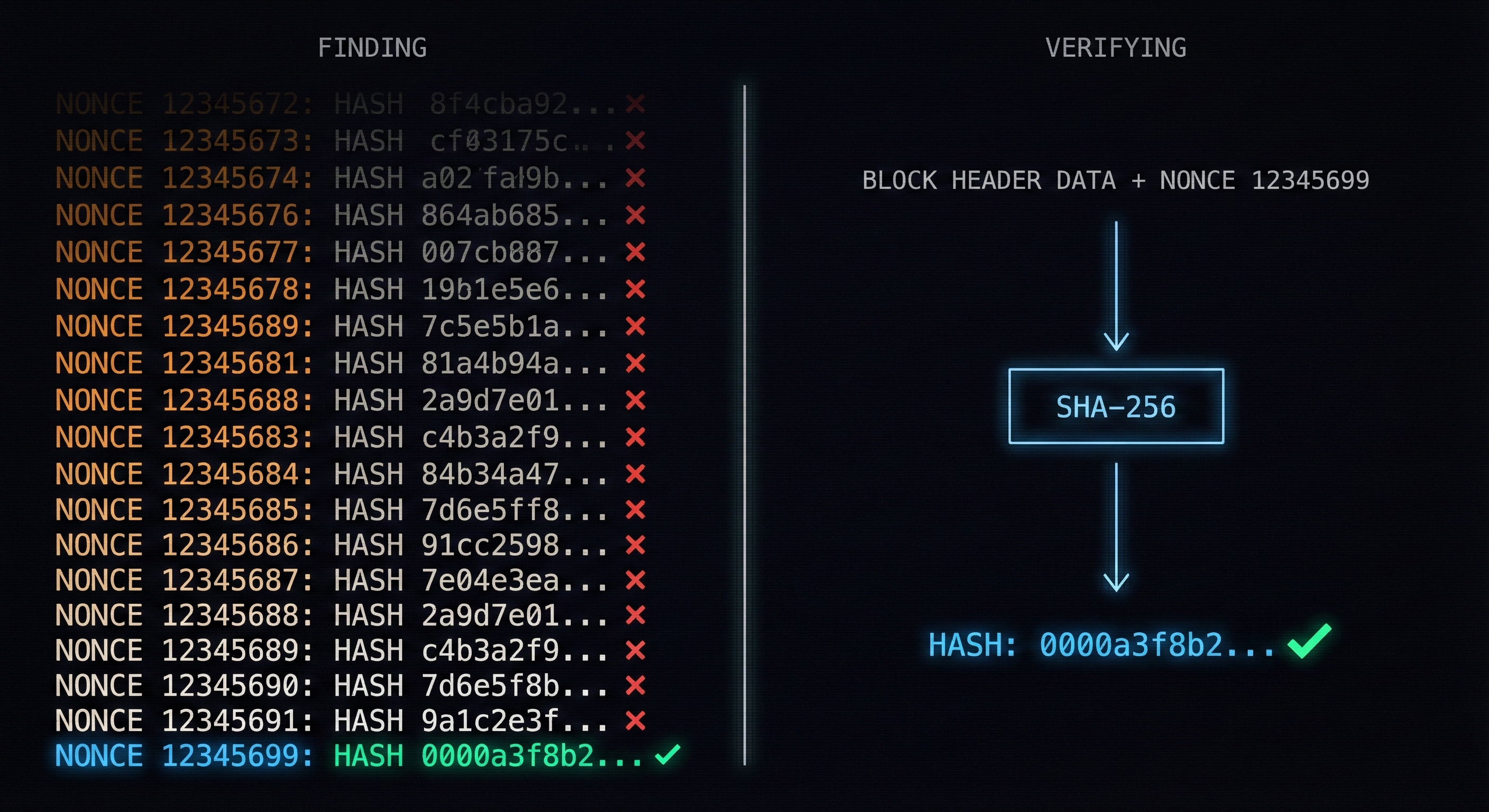
What Proof of Work Proves
Proof of work proves that someone spent real resources—electricity, hardware, time—to propose a block.
This is what secures Bitcoin. To rewrite the blockchain, an attacker must redo the work and outpace the entire network. That requires continuous computation and continuous energy expenditure. Not stored energy. Ongoing effort.
| What PoW Does | What PoW Doesn't Do |
|---|---|
| ✓ Proves computational work happened | ✗ Store energy in data |
| ✓ Makes rewriting history expensive | ✗ Convert electricity to "value" |
| ✓ Enables decentralized consensus | ✗ Create energy-backed currency |
| ✓ Creates verifiable scarcity | ✗ Preserve the energy used |
Why the Misconception Exists
The confusion likely stems from an intuitive but flawed analogy: if mining "costs" energy, that energy must go "into" the coin.
But cost and containment are different things.
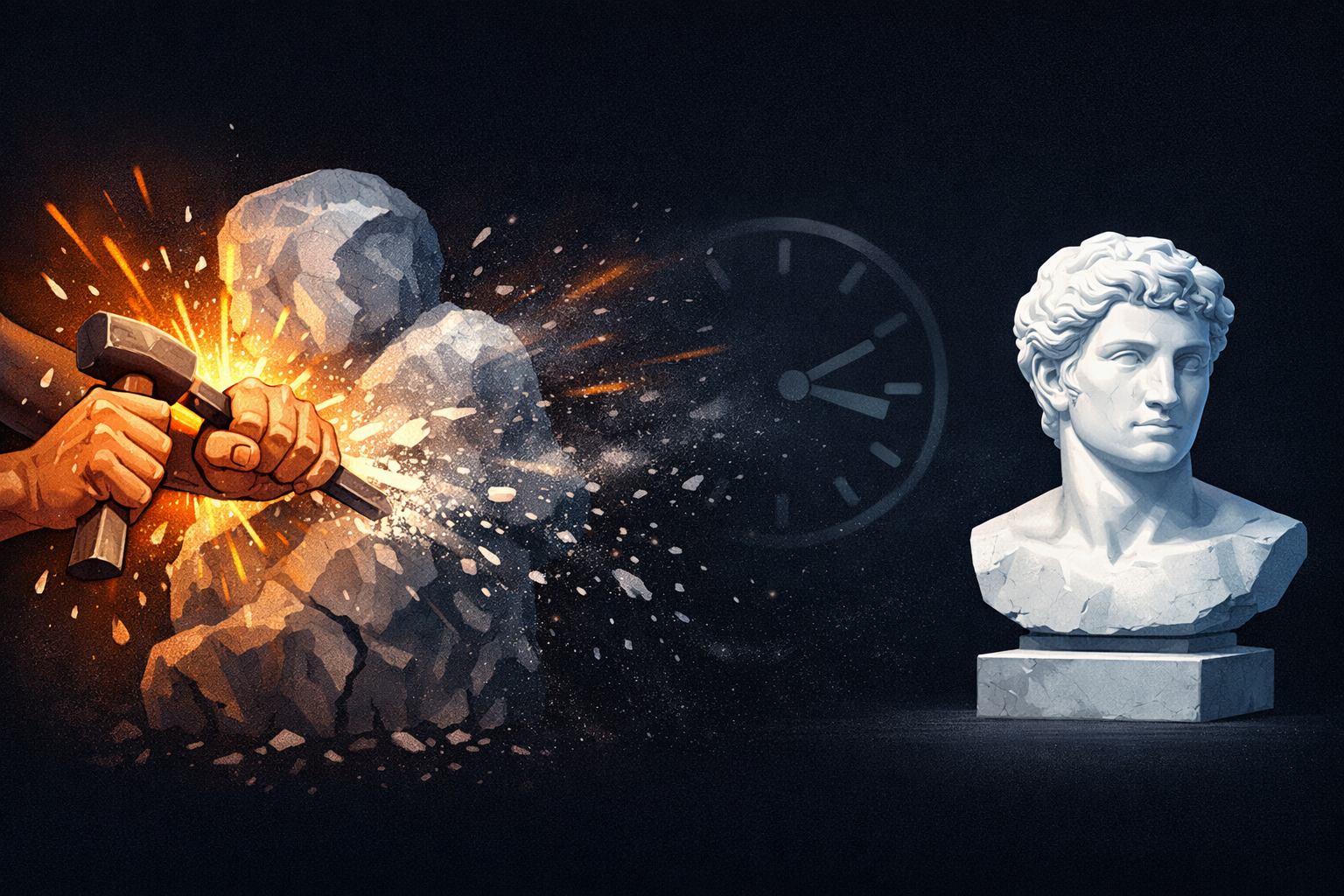
A sculpture doesn't contain the sculptor's labor—it evidences it. Bitcoin works the same way. The work is gone. The proof remains.
The Core Takeaway
Bitcoin mining converts electricity into heat while performing computation. Some outputs satisfy the network's rules and get recorded as proof.
The blockchain doesn't store energy. It stores evidence.